
 Skip Beckett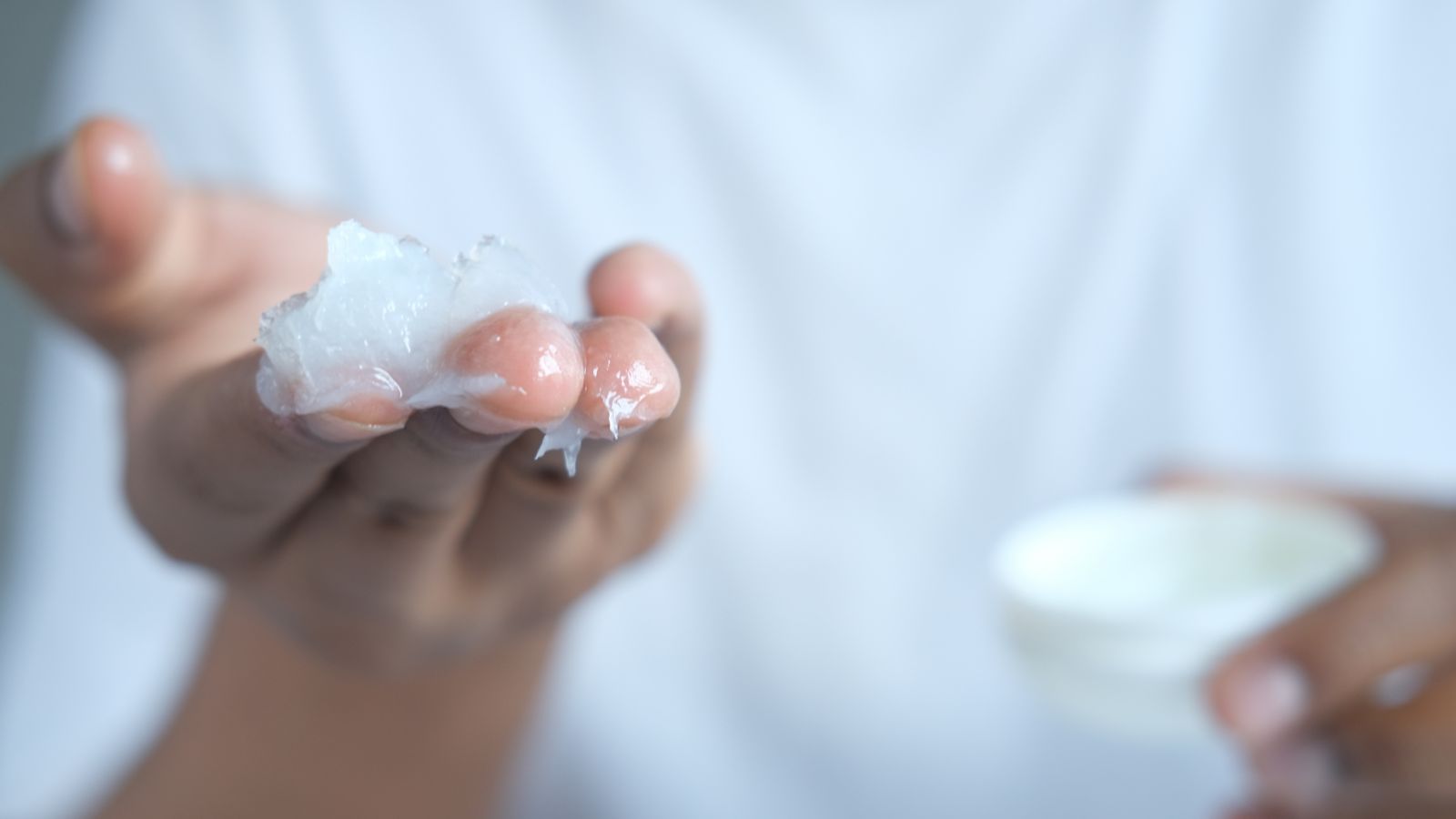
Working out what to put on skin after tattoo removal is harder than it should be. One clinic hands you a tube of antibiotic ointment. Another says plain petroleum jelly. A third sells a branded balm at the front desk. They can’t all be right, and the disagreement isn’t only between clinics. It runs through the published guidance too.
One question, three answers
Why the advice conflicts
Published guidance genuinely disagrees about whether to use an antibiotic ointment, and the disagreement runs inside a single organization.
You may need to wash the area and apply an antibiotic ointment for a few days.
Antibacterial ointments are not necessary as long as the wound is cleaned daily.
Some clinicians recommend emollients or antibiotic ointments and others do not. No single practice is universal.
Sources American Academy of Dermatology; StatPearls. Each line paraphrases that source’s published guidance.
What the dressing is actually for
The job isn’t to disinfect. It’s to keep the wound from drying out.
The AAD’s wound-care guidance is direct about why: petroleum jelly stops a wound drying out and forming a scab, and wounds that scab over take longer to heal. Keeping the surface moist and covered lets the skin close from underneath while the outside stays soft.
That reframes the whole question. You’re not medicating anything. You’re maintaining conditions.
Petroleum jelly, and why it’s the default
Plain petrolatum, sold as petroleum jelly, does the job with nothing added. It holds moisture in, it doesn’t sting, and almost nobody reacts to it. The AAD names it specifically in its wound-care guidance for exactly this reason.
For a laser-treated area, that usually means a thin layer over clean, dry skin, then a covering. Thin is the operative word. A thick smear does nothing extra and makes the dressing slide around.
The antibiotic ointment question
This is where guidance splits, including inside the AAD itself.
The AAD’s page on laser tattoo removal says you may need to wash the area and apply an antibiotic ointment for a few days. Its general wound-care guidance says antibacterial ointments aren’t necessary as long as the wound is cleaned daily. StatPearls describes the same split among clinicians, with some recommending emollients or antibiotic ointments and others not, and no single practice being universal.
One randomized trial, 1,249 wounds
Petroleum jelly against antibiotic ointment
922 patients were randomly assigned to one ointment or the other after dermatologic surgery, then followed for four weeks.
White petrolatum
Bacitracin ointment
Reading it straight
The infection difference was not statistically significant, so neither ointment protected better. The allergy column is what separates them, and an allergic reaction on a healing wound looks a lot like the infection you were trying to avoid.
Source Smack DP et al., JAMA 1996;276(12):972-977. The wounds studied were surgical, not laser tattoo removal, which makes this the closest available evidence rather than a study of removal itself.
The evidence that settles it comes from dermatologic surgery. In a randomized controlled trial published in JAMA, researchers followed 922 patients with 1,249 wounds, comparing white petrolatum against bacitracin ointment. Infection rates showed no significant difference between the two. What did differ was allergy: four patients in the bacitracin group developed allergic contact dermatitis, and nobody in the petrolatum group did.
That matters because bacitracin and neomycin, the active ingredients in the familiar over-the-counter antibiotic ointments, are among the more common contact allergens in dermatology. An allergic reaction on a healing wound looks like redness, swelling, and itching, which is to say it looks like the infection you were trying to prevent.
One caveat worth stating. That trial studied surgical wounds, not laser tattoo removal specifically. The wounds are comparable, clean and shallow and made in a controlled setting, and the finding is the best evidence available for this kind of aftercare. It isn’t a study of your exact situation.
The practical read: if your provider hasn’t told you to use an antibiotic ointment, there’s little reason to buy one. If they have, ask what it’s for. There are situations that call for one, and a good provider can name theirs.
Covering it, and for how long
The AAD’s instruction is to keep the area moisturized and covered until the skin has healed, which is the part people abandon early. A dressing feels unnecessary once the surface stops weeping, and that’s several days before the skin has actually closed.
A non-stick pad and paper tape, changed daily when you reapply the ointment, is enough. Once the skin is properly closed, the dressing comes off and the job changes to sun protection, which runs far longer.
That handover is worth planning for, because sunscreen goes on healed skin only, never on an open or crusted area. Our guide to sun exposure after tattoo removal covers what that looks like across a full treatment.
What to leave in the cupboard
A few things get recommended online with no support behind them:
- Fragranced body lotions. Fragrance is a leading cause of contact dermatitis, and healing skin is more reactive than usual.
- Vitamin E oil applied to wounds. It’s persistently popular and the evidence for improving scars doesn’t hold up.
- Alcohol, hydrogen peroxide, or anything that stings going on. These damage healing tissue without a matching benefit.
- Branded tattoo aftercare balms, unless your provider recommends one. Most are petrolatum or a similar base with botanicals added, and the botanicals are what you might react to.
When the routine changes
Blisters change things. The rule is to leave them intact and keep applying the routine around them, since the roof of a blister is doing a job. Our guide to blistering and scabbing after removal covers what’s normal in that phase and the signs that mean you should call somebody.
For the rest of the healing window, including what to avoid and how the whole thing fits together across sessions, start with our tattoo removal aftercare guide.
A note on this guide
This article describes what the published evidence supports, and it isn’t medical advice. Your provider’s written instructions are based on your skin and the settings they used, so those come first. If their instructions differ from what you’ve read here, ask them why, because they may well have a specific reason.
Sources
American Academy of Dermatology, Minimize a scar: Proper wound care tips from dermatologists
American Academy of Dermatology, Tattoo removal: Lasers outshine other methods
Hohman MH, Ramsey ML, Laser Tattoo Removal, StatPearls, National Library of Medicine
Last reviewed: July 27, 2026. Updated as we learn more.
