
 Skip Beckett
 If you have darker skin and are researching tattoo removal, you’ve probably run into two unhelpful extremes: pages that make it sound dangerous, and clinics promising their machine makes it perfectly safe for everyone. The truth sits in between, and it’s worth understanding clearly. Removal absolutely can be done well on darker skin, but it carries a higher risk of pigment changes than it does on lighter skin, and that risk is managed by the right laser, the right settings, and an unhurried provider. Here’s what the evidence actually says, and what to look for.
Why skin tone matters for removal
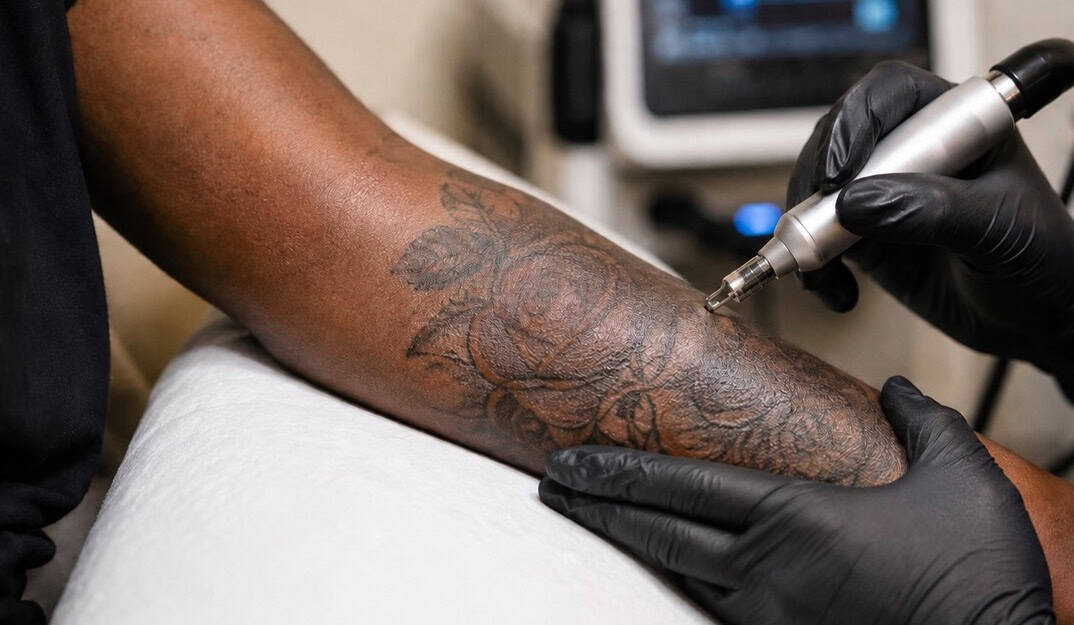
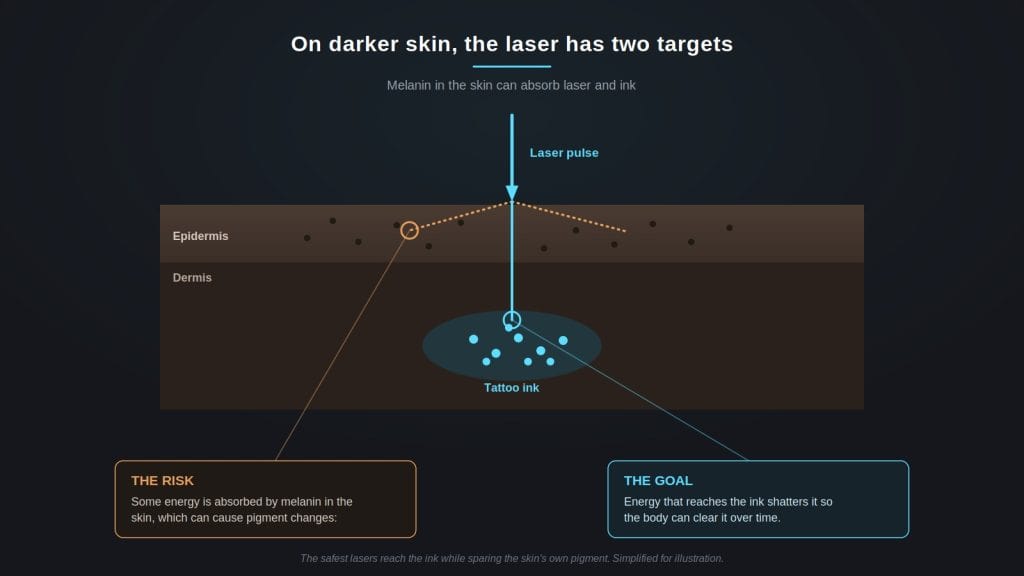
Laser removal works by sending light that the tattoo ink absorbs, shattering it into fragments your body clears over time. The complication is that the pigment in your own skin, melanin, also absorbs laser light. In darker skin there is more melanin near the surface, so some of the laser’s energy can be taken up by the skin itself rather than only the ink. When that happens, it can disturb the skin’s natural pigment. This is the central reason skin tone matters, and it’s why clinicians pay close attention to it before treating.
The real risk: pigment changes
The two outcomes to understand are hypopigmentation, where the treated skin loses color and looks lighter than the skin around it, and hyperpigmentation, where it darkens. According to StatPearls, the clinical reference from the National Library of Medicine, darker skin is more prone to both after laser exposure, which is why a patient’s skin color is one of the most important things a provider assesses before starting. These changes are often temporary and fade over months, but they can sometimes be lasting, which is exactly why careful treatment matters so much on melanin-rich skin. This is not a reason to avoid removal. It’s a reason to be selective about who performs it and how.
One honest caveat: darker skin, and the deepest tones especially, has long been underrepresented in dermatology research. Some tattoo-removal studies include only lighter skin types, so a portion of the guidance here is drawn from research on skin of color broadly rather than tested specifically on the very darkest skin. That gap is worth knowing, and it is one more reason to seek out a provider with real, hands-on experience treating skin like yours.
The laser that makes the difference
Not all removal lasers are equally safe for darker skin, and this is the single most important technical point to understand. A longer-wavelength laser, the 1064 nm Q-switched Nd:YAG, penetrates more deeply and is drawn less to the melanin near the skin’s surface, so it can target ink while largely bypassing your natural pigment. Clinical guidance consistently identifies it as the safest choice for darker skin types. By contrast, the older Q-switched ruby laser has a high affinity for melanin and, as dermatology guidelines note, is not recommended for darker skin because of the risk of hypopigmentation. So one fair question to ask any provider is simply which laser they will use, and why.
There is a trade-off worth knowing. The wavelength that’s safest for your skin, 1064 nm, is best at clearing dark inks like black and blue, and is less effective on bright colors. Removing a multicolored tattoo may require additional wavelengths, and those need to be used more cautiously on darker skin. A good provider will talk through this honestly rather than promising every color will vanish easily.
What a careful provider does differently
On darker skin, the difference between a good outcome and a pigment problem is often the provider’s caution rather than the machine alone. Careful practice tends to look like a few consistent things: assessing your Fitzpatrick skin type before discussing anything else, using more conservative energy settings, spacing sessions further apart to let inflammation fully settle, and sometimes treating a small test area first to see how your skin responds before committing to a full pass. A recurring theme in the clinical literature is that two people with the same skin type can heal differently, so a provider who watches how your skin actually responds and adjusts, rather than following a fixed formula, is doing it right.
This also means safer treatment can take more sessions. Gentler settings clear ink more slowly, so protecting your natural skin tone may mean trading some speed. That’s usually the right trade, and a provider who is honest about it is showing you good judgment, not upselling you.
Questions worth asking before you book
Because so much rides on the provider, the consultation matters even more here than usual. It’s reasonable to ask which laser they use and whether they have the 1064 nm Nd:YAG, how much experience they have treating your skin tone specifically, whether they will do a test spot, and how they adjust their approach for darker skin. You can also ask to see before-and-after photos of patients with a similar complexion. A provider who answers these clearly and comfortably is a good sign. One who brushes them off, or promises zero risk, is not.
The honest bottom line
Tattoo removal on darker skin is genuinely achievable, and modern lasers have made it far safer than it once was. The higher risk of pigment change is real, but it is manageable with the right wavelength, conservative settings, patience between sessions, and a provider experienced with melanin-rich skin. The goal is to clear the ink while protecting the skin you are keeping, and that is a reasonable thing to expect from the right practitioner. If you are weighing the decision, our guide to hyperpigmentation and hypopigmentation explains those pigment changes in more depth.
A note on this guide
Tattoo Takeoff is an independent, research-based resource. It is not a clinic and does not perform removal, and nothing here is medical advice. Skin responds individually, and the risks described here are real, so consult a qualified, licensed provider, ideally one experienced with your skin tone, about your own situation.
Last reviewed: July 2, 2026. Updated as we learn more.
Sources
StatPearls, “Laser Tattoo Removal,” National Center for Biotechnology Information
