
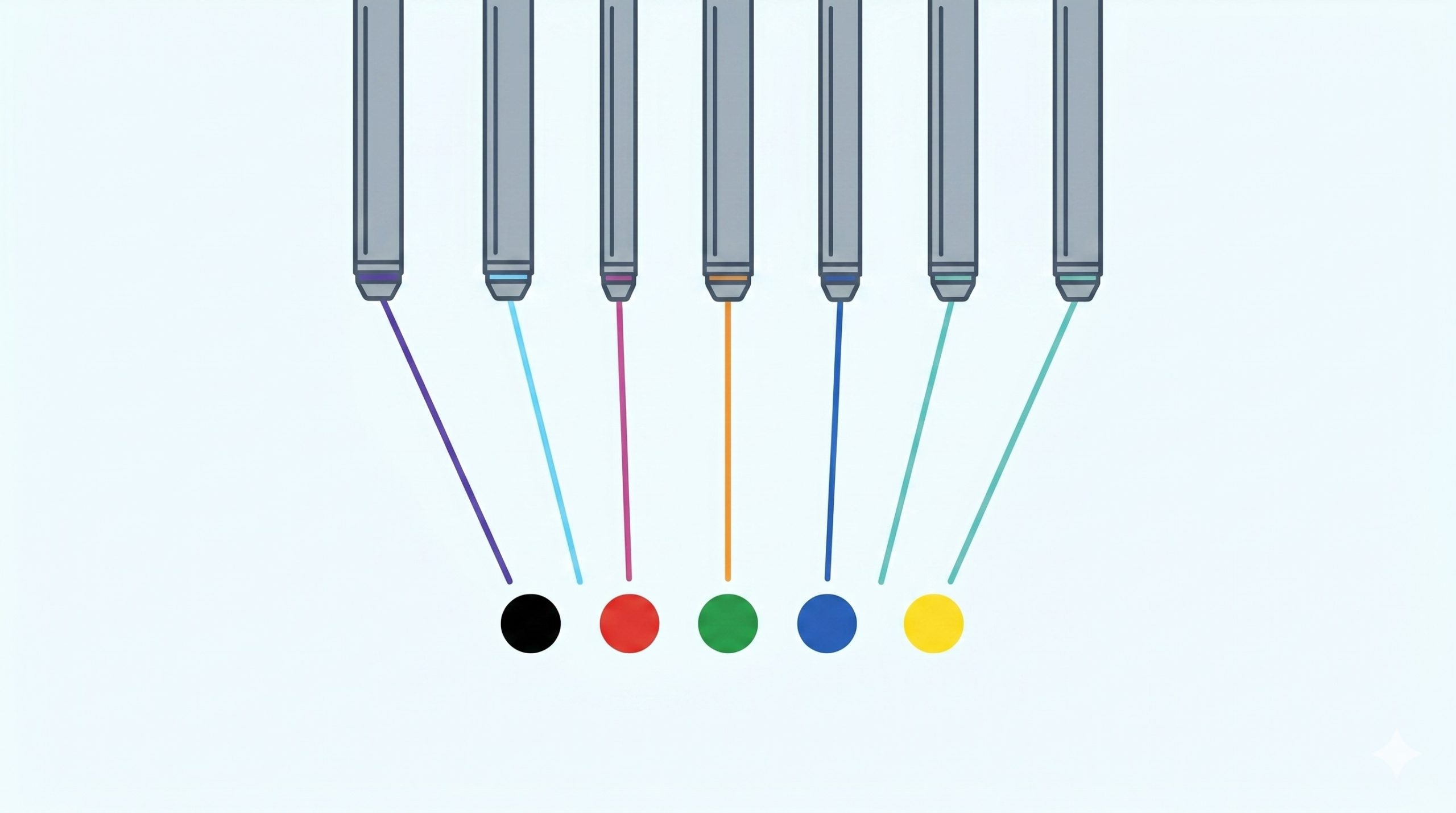
One of the first things that surprises people about tattoo removal is how much the color matters. A solid black tattoo and a bright green one of the same size can need very different numbers of sessions, and some colors may never clear completely. It caught us off guard too when we first dug into it, because from the outside a tattoo is just a tattoo. The reason comes down to physics, specifically how different pigments absorb light, and once that idea clicks the whole difficulty ranking starts to make sense.
Why black is the easiest
Black is the easiest ink to remove, and it is not a close contest. Black pigment absorbs light across the entire visible spectrum, which means it soaks up energy from essentially every wavelength a removal laser can produce. Whatever laser a provider aims at black ink, the ink absorbs it and fragments, and dark blue behaves much the same way. That broad absorption is why black and dark tones respond the fastest and the most predictably, and it is a big part of why the tattoos that clear cleanly tend to be the dark ones.
Why it is about absorption, not appearance
Here is the idea that explains everything else. A pigment looks like a particular color because it reflects that color back to your eye and absorbs the others. Green ink looks green because it reflects green light, which also means it does not absorb a green laser well, so a green-wavelength beam mostly slides past it without doing much. To fragment green you need a wavelength that green actually absorbs, which sits over in the red part of the spectrum. The rule of thumb dermatologists use is that a laser works best on a color when its own light is roughly the opposite of that color, and a laser that is the same color as the ink barely touches it. Aim the wrong wavelength at a color and very little energy gets absorbed, so the ink hardly fragments at all.
The wavelengths and what they target
Different lasers produce different wavelengths of light, measured in nanometers, and a well-equipped clinic keeps several on hand so it can match the right one to each color in a tattoo.
- 1064 nm (Nd:YAG) is the workhorse for black, dark blue, and other dark tones. It is the most commonly used wavelength, since black is the most common ink, and it is also the safest choice for darker skin because its longer wavelength is absorbed less by the melanin in the skin.
- 532 nm (frequency-doubled Nd:YAG, sometimes called KTP) handles red and warm tones such as orange and brown.
- 694 nm (ruby) and 755 nm (alexandrite) are the ones brought in for blue and green, the colors that shrug off the more common wavelengths.
Because most tattoos mix several colors, fully clearing a multi-color piece often calls for more than one wavelength, and sometimes more than one machine. A clinic that has only a single wavelength can clear black well but may struggle with greens and blues, which is worth knowing before you book.
The stubborn colors
Green and teal are among the hardest colors to remove, because they reflect most of the standard wavelengths and only respond to the specialized lasers like 694 nm or 755 nm. Even with the right laser they often take many more sessions than black, and complete clearance is not always possible. Yellow is stubborn for a different reason, since its absorption sits at very short wavelengths that no common removal laser targets well, so it tends to fade slowly and incompletely. The broad pattern holds across the board: dark colors absorb light widely and clear well, while light, vivid colors absorb it narrowly and resist.
White and the darkening problem
White ink and flesh-toned inks deserve a special warning, because they are among the most unpredictable of all. Instead of fading, they can darken when hit with a laser. These inks often contain compounds like titanium dioxide or iron oxide, and laser energy can chemically change those compounds in a way that turns a white or pale area gray or black. That change can be difficult or impossible to reverse, which is exactly why a careful provider will test a small spot first before treating any white, pale, or cosmetic tattoo. It is also why permanent makeup, which usually relies on these same inks, calls for real caution.
What this means in practice
If your tattoo is mostly black or dark blue, you are working with the easiest case, which usually means fewer sessions and more predictable fading. If it includes greens, bright blues, yellows, or white, it is fair to expect more sessions and a real chance that some ink will not clear completely, and you will want a clinic that has more than one wavelength to work with. None of this means colored tattoos cannot be treated. It means the right equipment and realistic expectations matter more for them than they do for plain black work. When you are choosing a provider, asking which wavelengths their machine actually covers is a fair and revealing question, and it matters most if your tattoo has the harder colors.
A note on this guide
Tattoo Takeoff is an independent, research-based resource. It is not a clinic and does not perform removal, and nothing here is medical advice. A qualified provider can assess how your specific colors are likely to respond and which wavelengths suit them.
Sources
- StatPearls (NCBI Bookshelf), “Laser Tattoo Removal”
- PubMed Central, “Laser Tattoo Removal: A Clinical Update”
Last reviewed: June 24,2026. Updated as we learn more.
