
 Skip Beckett
 Not every unwanted tattoo needs to disappear completely. If your plan is to cover it with new work rather than erase it, you usually don’t need full removal at all. In fact, a few laser sessions to lighten the old ink might give a tattoo artist the room they need to design something better. Here’s a quick primer on how fading for a cover-up actually works and how to find out if it’s right for you.
Fading is not the same as full removal
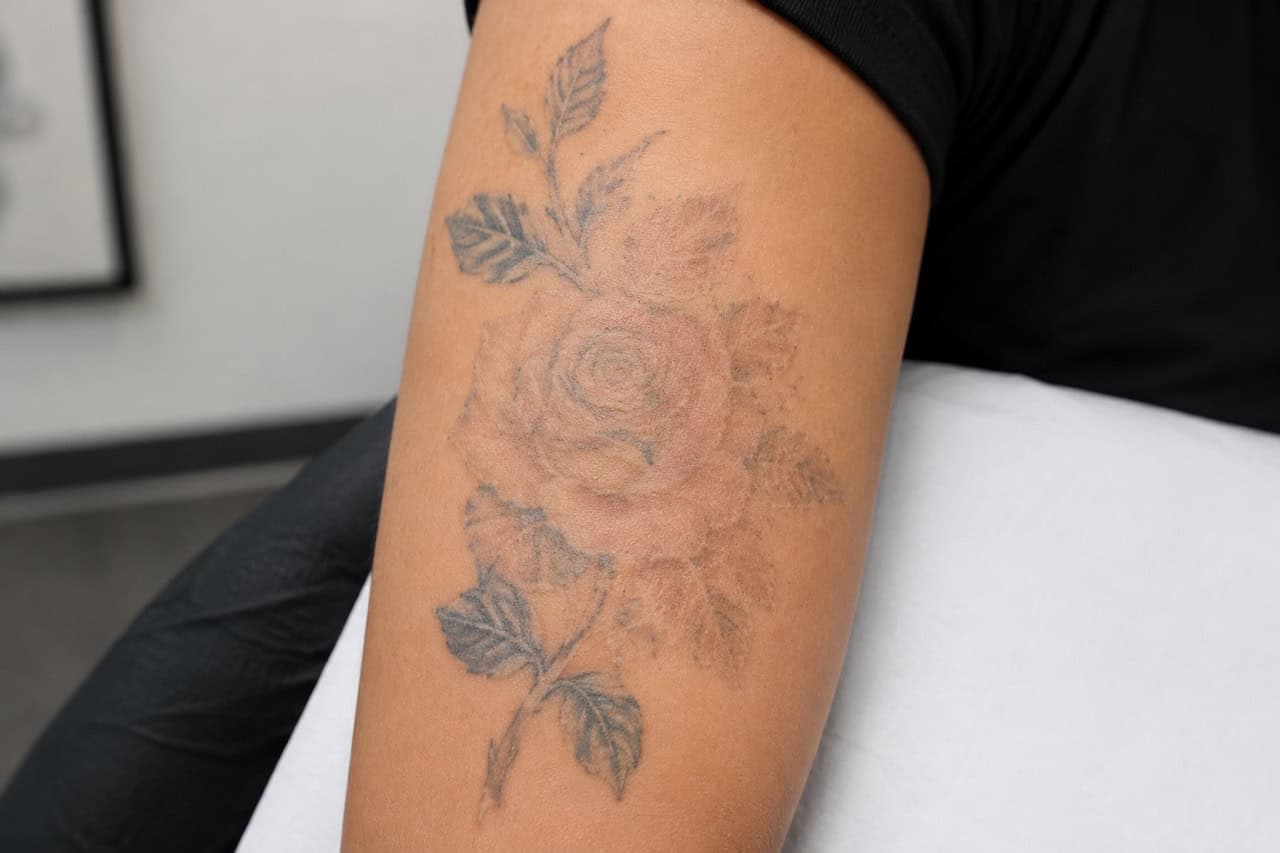
The goal of a cover-up fade is different from erasing a tattoo. You aren’t trying to get back to blank skin. You’re trying to lighten the existing ink enough that it will not fight through the new design. Dark lines, dense shading, and heavy black ink can all show through a cover-up if they’re too strong underneath, which is why artists often want the old piece lightened first. Fading just knocks the old tattoo down enough to give the artist a workable canvas.
How many sessions it usually takes
Because you’re only lightening rather than fully clearing the ink, fading for a cover-up generally takes fewer sessions than complete removal. The commonly cited range is somewhere around two to six sessions, compared with the eight to fifteen or more that full removal can require. The exact number depends on the same things that drive any removal timeline: how dark and saturated the tattoo is, its colors, its age, its location, and how your skin responds. As with full removal, sessions are spaced several weeks apart to let your body clear the loosened ink and your skin heal.
Talk to your tattoo artist first
This is the step people skip, and it matters more than any other. How much fading you need depends entirely on what your artist plans to tattoo over it. A bold, dark cover-up design may need only a little lightening, while a smaller, finer, or more colorful piece may need the old tattoo faded much more. So the smart order is to find your cover-up artist and settle on a design direction first, then fade to the level they actually need. Fading blindly, without the artist’s input, risks doing too many sessions or too few.
One thing worth knowing about timing
After your final fading session, your skin needs time to heal fully before it can safely take new ink, commonly around six to eight weeks. There’s also a subtler reason not to rush: your body keeps clearing loosened ink for weeks after a laser session, so a tattoo can continue to lighten even after you have stopped. If an artist tattoos over ink that then keeps fading underneath, parts of the new piece that relied on that old depth can shift. Giving it time protects the cover-up you’re paying for.
When full removal might make more sense
Fading is not always the right call. If your new design is smaller than the original, or very light and delicate, or if you want true creative freedom rather than a design shaped around old ink, complete removal may serve you better. The honest way to decide is with both your removal provider and your tattoo artist, since the choice depends on the specific old tattoo and the specific new one. Our tattoo removal cost calculator can help you weigh a few fading sessions against fuller removal.
The honest bottom line
For most cover-ups, you don’t need full removal, just enough fading to give your artist a clean foundation, which often means only a handful of sessions. The single best move is to plan the new design with your artist first, then fade to the level they need, and give your skin time to heal before the new work goes on. Done in that order, fading turns a tattoo you’re stuck with into a genuine fresh start.
A note on this guide
Tattoo Takeoff is an independent, research-based resource. It is not a clinic and does not perform removal, and nothing here is medical advice. Your tattoo and your skin are individual, so consult a qualified, licensed provider, and your tattoo artist, about your own plan.
Last reviewed: July 02, 2026. Updated as we learn more.
Sources
American Academy of Dermatology, “Tattoo removal: Lasers outshine other methods”
“Laser Tattoo Removal,” National Library of Medicine (PMC)
U.S. Food and Drug Administration, “Tattoo Removal: Options and Results”
