
 Skip Beckett
 A removal session itself is quick, often just a few minutes under the laser. What comes after is where most of the real change happens, and it unfolds slowly over the following weeks. If you have only ever thought about the appointment itself, the long stretch in between can feel like nothing is happening. In fact the opposite is true. The weeks between sessions are when your tattoo actually fades, and knowing what to expect through one full cycle makes the whole process easier to plan for and less worrying to live through.
The short version is that the laser breaks the ink into fragments small enough for your body to remove, and then your immune system carries those fragments away over the weeks that follow. That is why fading shows up gradually between appointments rather than all at once, and why removal takes several sessions.
The first few days
Right after a session the treated skin behaves a lot like a sunburn. Expect redness, some swelling, and tenderness, and do not be alarmed if the area looks worse before it looks better in the first day or two. Blistering can happen as well, particularly over darker or densely packed ink, and while it can look dramatic it is a normal response. The most important thing in this window is to leave it alone: keep it clean, follow the aftercare your provider gave you, and resist any urge to pop a blister or pick at the skin, since that is what turns a normal reaction into a scar.
The first couple of weeks
Over the following week or two the surface settles down. The redness and swelling ease, and any scabs or light crusting form and then fall away on their own. This is ordinary healing, and the rule throughout is the same: let it happen without interfering. Keep the area moisturized, keep it out of the sun, and do not exfoliate or scrub it. Sun protection matters more here than people expect, because freshly treated skin is vulnerable to pigment changes, so covering the area or keeping sunscreen on it is worth the effort.
The quiet weeks in the middle
Once the surface has healed, it can seem like the process has stalled, because there is nothing dramatic to watch. This is actually when the most important work is happening, and it is invisible. Your immune system is steadily carrying the shattered ink out of the skin, and the tattoo lightens gradually across these weeks. Fading that arrives slowly, rather than in one satisfying jump, is the process working exactly as designed. There is nothing you need to do here except live normally, though staying healthy and hydrated supports the body that is doing the work.
Why you wait six to eight weeks
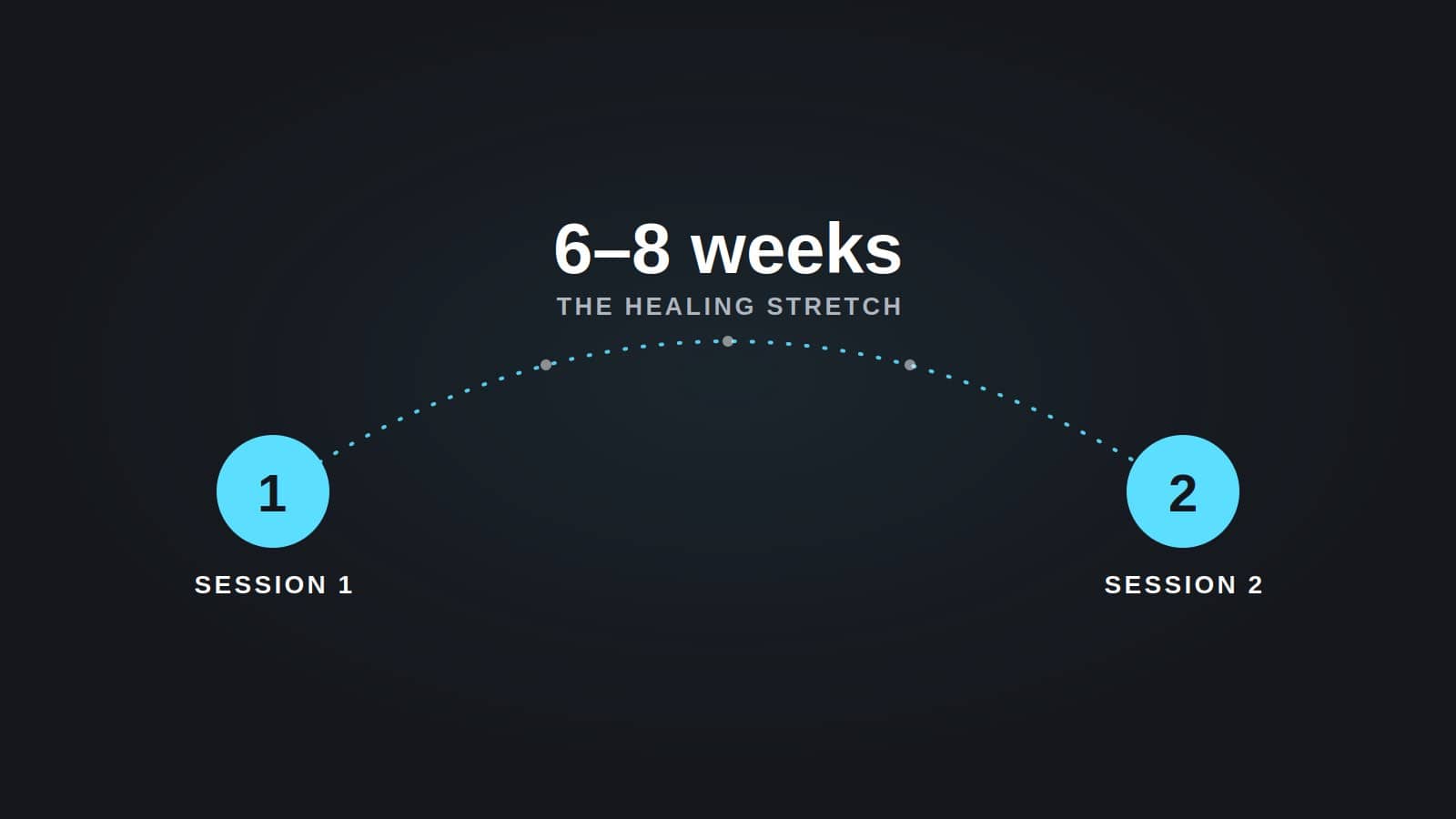
By around six to eight weeks, the skin has recovered and your body has cleared as much ink as it is going to from that session. That is the point at which the next treatment makes sense, which is why providers space sessions roughly that far apart. The gap is not your clinic being slow or cautious for its own sake. It is the time the clearance genuinely takes. Booking sessions closer together does not speed up your results, because the laser would be passing over ink your body is still in the middle of removing, which adds irritation without adding progress. The wait is doing something, even when it feels like waiting.
When to check in with your provider
Most healing is uneventful, but it is worth knowing the difference between normal and not. Redness, mild swelling, light scabbing, and a sunburned feeling in the first days are all expected. Signs that warrant a call to your provider include spreading redness, warmth, pus, increasing rather than decreasing pain, or anything that seems to be getting worse rather than better as the days pass. We are not a clinic and cannot assess your skin, so anything that worries you is a question for the provider who treated you. They would far rather hear from you than have you wait it out.
The bigger picture
Across a full course of treatment, this cycle simply repeats: a quick session, a few days of healing, a couple of weeks for the surface to settle, then weeks of quiet clearance, and a little more fading each round until the tattoo is gone or as light as you want it. Knowing that the slow stretches are the productive ones makes the whole thing far less frustrating. The appointments are the visible milestones, but the weeks in between are where your tattoo actually leaves.
A note on this guide
Tattoo Takeoff is an independent, research-based resource. It is not a clinic and does not perform removal, and nothing here is medical advice. Healing and timelines vary from person to person, so follow the aftercare and schedule your own provider gives you, and consult them about anything specific to your skin.
Sources
StatPearls, “Laser Tattoo Removal,” National Center for Biotechnology Information
American Academy of Dermatology, “Tattoo removal: Lasers outshine other methods”
Last reviewed: June 28, 2026. Updated as we learn more.
