
 Skip Beckett
 If you’ve started looking into tattoo removal, you’ve probably seen laser treatment mentioned everywhere, alongside the occasional ad for a cream or a mention of surgery. But do these at-home or faster-sounding options even work? In short, laser became the standard for good reason. So let’s take a look at the research and see how they actually compare.
Why laser became the standard
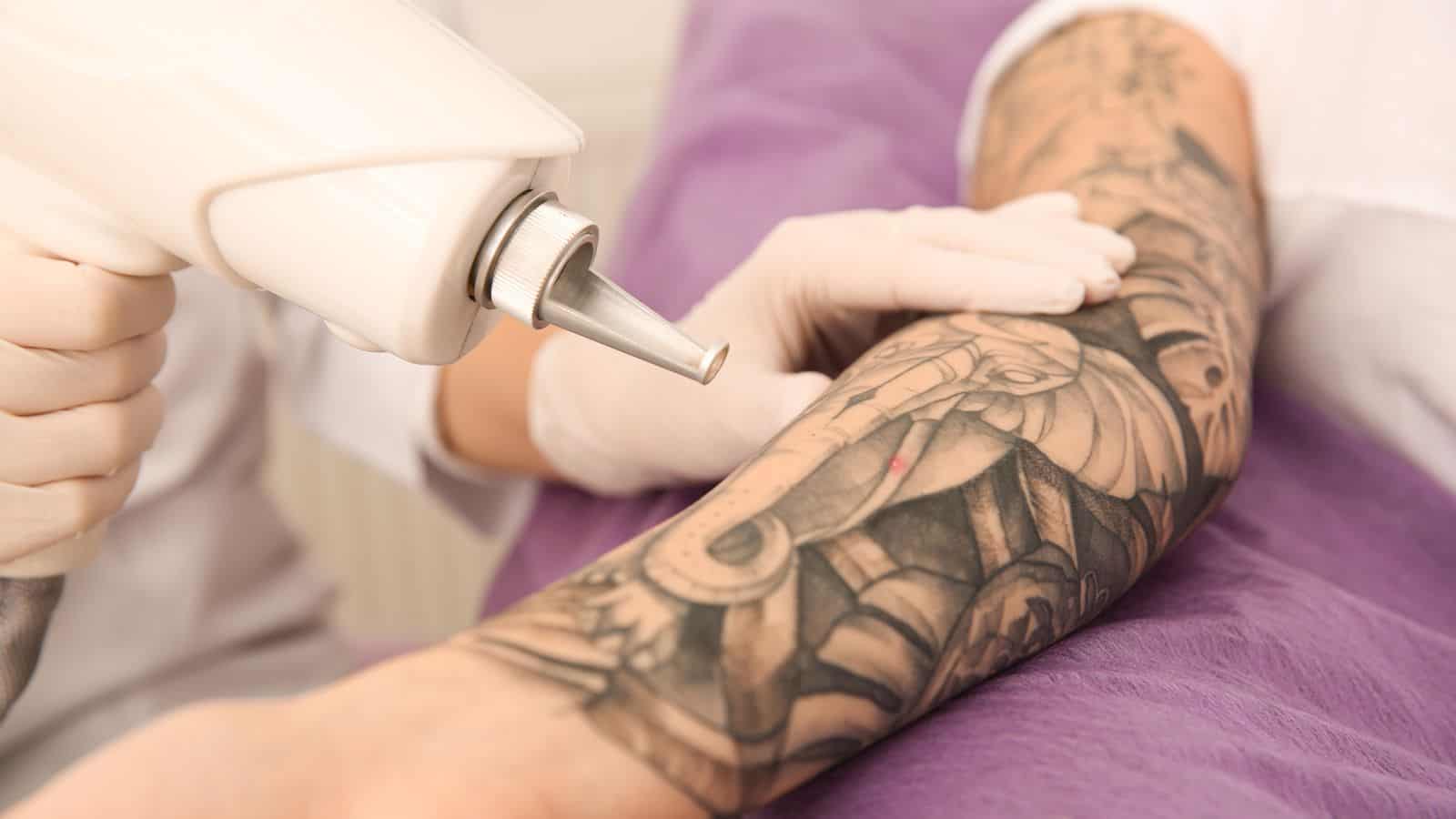
Laser removal works by sending short pulses of light that the ink absorbs, which shatters the pigment into fragments small enough for your body to clear on its own. Because it targets the ink rather than cutting or scraping the skin away, it tends to leave far less damage behind than older approaches. The American Academy of Dermatology notes that lasers have largely replaced other tattoo-removal methods, and that’s mostly a story about precision: the laser can break up ink while leaving the surrounding skin comparatively intact, which is the whole reason scarring is less likely than with methods that physically remove tissue.
At a glance
How the methods actually compare
The short version of everything below: one method reaches the ink without removing skin, and the rest either wound the skin or don’t work.
Based on American Academy of Dermatology, Cleveland Clinic, and FDA guidance. Talk to a board-certified dermatologist about your own tattoo.
Surgical excision
Surgical excision is exactly what it sounds like. A surgeon cuts out the tattooed skin and stitches the remaining skin back together. Cleveland Clinic describes it as well suited to small tattoos and not effective for large ones, which is the key limitation. It does remove the tattoo in one go, but it trades the ink for a surgical scar, and that scar is permanent. For a very small tattoo in the right spot, some people accept that trade. For anything sizable, it’s rarely the path people choose.
Dermabrasion
Dermabrasion removes the tattoo by sanding away the outer layers of skin that hold the ink. Cleveland Clinic notes that it’s a surgical procedure, usually requiring a local or general anesthetic, and that it leaves an open wound that has to heal afterward. Results are less predictable than laser, and because it physically abrades the skin, it carries a real risk of scarring and texture changes. It’s become much less common as laser technology has improved, and it tends to come up now only when laser isn’t an option for someone.
Chemical peels
Chemical peels use an acid, such as trichloroacetic acid, applied to the skin to peel away its outer layers and lighten the tattoo over time. Cleveland Clinic lists it among the available methods, but the same limitation applies as with other surface approaches: tattoo ink sits in the dermis, the deeper layer of skin, and a peel that works on the surface struggles to reach it. It’s not a reliable way to fully remove a tattoo, and stronger peels carry their own risk of irritation and discoloration.
Tattoo removal creams
This is the one worth being blunt about, because it’s where people waste the most money. Removal creams promise to fade or erase a tattoo at home, but Cleveland Clinic states plainly that they’re not as successful at removing tattoos as other therapies. The reason is simple physics: the ink is locked in the dermis, and a cream applied to the surface can’t penetrate deep enough to reach it. At best these creams do little. At worst they irritate or damage the skin while leaving the tattoo essentially untouched. There’s no FDA-approved cream that removes a tattoo, and that absence is telling.
Why the easy options fail
The ink sits deeper than the surface methods can reach
Tattoo ink is locked in the dermis, the deeper, stable layer of skin. That single fact explains why creams and peels struggle, and why the laser is built to reach it.
Based on American Academy of Dermatology and Cleveland Clinic guidance. Skin layers shown schematically, not to scale.
A quick note on cover-ups
A cover-up isn’t removal, but it comes up often enough to mention. A skilled tattoo artist designs a new piece over the old one. It works only within the limits of the original tattoo’s size and darkness, which is where removal and cover-ups sometimes meet: a few laser sessions can lighten a stubborn tattoo enough to give an artist room to work, even when full removal isn’t the goal.
The bottom line
For most people and most tattoos, laser is the safest and most effective option, which is why it’s become the default. Surgical excision has a narrow use for very small tattoos, dermabrasion and chemical peels are largely outdated and less predictable, and removal creams don’t deliver. Whichever direction you’re leaning, the AAD recommends consulting a board-certified dermatologist, who can look at your specific tattoo and skin and tell you what’s realistic. If you want to understand why laser works the way it does, our guide to how your body clears tattoo ink explains the mechanism in plain terms.
A note on this guide Tattoo Takeoff is an independent, research-based resource. It’s not a clinic and doesn’t perform removal, and nothing here is medical advice. What’s right for your skin and your tattoo is individual, so consult a qualified, licensed provider about your own situation.
Sources
American Academy of Dermatology, “Tattoo removal: Lasers outshine other methods.”
Cleveland Clinic, “Tattoo Removal.”
U.S. Food and Drug Administration, “Tattoo Removal: Options and Results.”
Last reviewed: July 08, 2026. Updated as we learn more.
